

 USD
USD


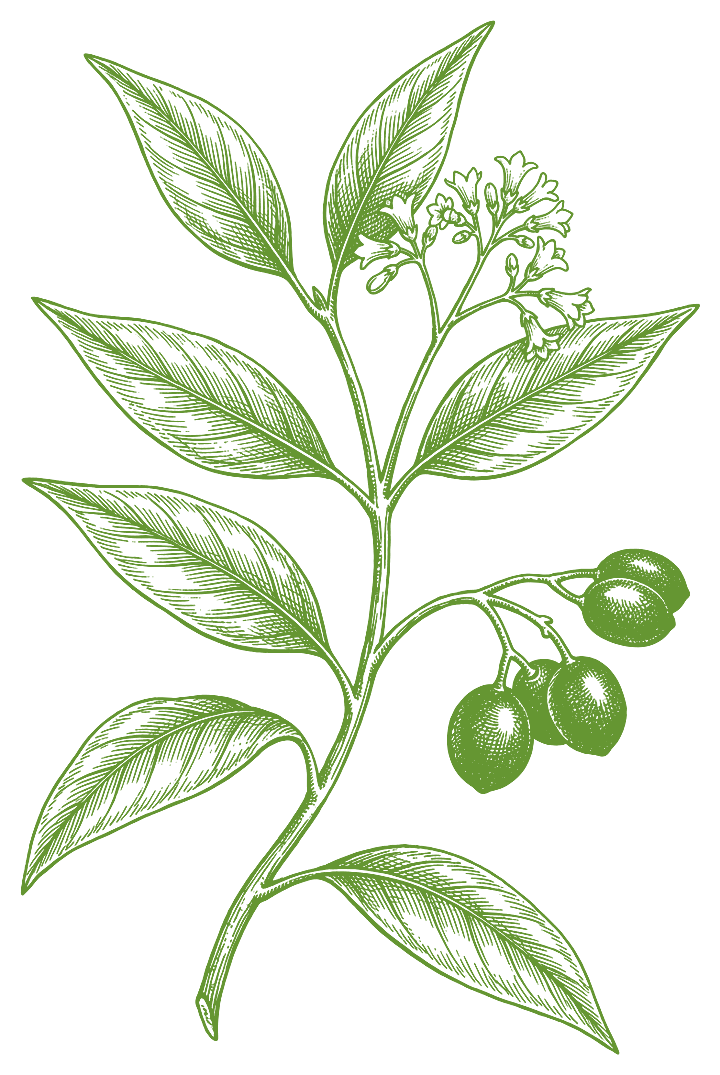
Did you know?
Chá de bugre is not an Amazon plant. It grows in the forests of southern and eastern Brazil and in neighboring Paraguay and Argentina[1, 2].
The name Cordia salicifolia, "willow-leaved cordia", was coined in 1829 by Adelbert von Chamisso, the German-language poet best known for Peter Schlemihl, the tale of a man who sells his shadow[5, 6].
Another old botanical name for the tree, Cordia coffeoides, means "coffee-like cordia", and in Brazil it is also called café-de-bugre and café-do-mato, "coffee of the woods"[1, 3, 8].
It belongs to the borage family, also known as the forget-me-not family[1, 9].
Its genus, Cordia, is large: more than 200 species, some of them important timber trees[9].
Origins and history
Chá de bugre is a tree of the Atlantic side of South America. In Brazil it is recorded from Bahia and Minas Gerais south through Espírito Santo, Rio de Janeiro, São Paulo, Paraná and Santa Catarina to Rio Grande do Sul, and it crosses the border into Paraguay and northeastern Argentina[1, 2]. It grows in both humid and seasonally dry forests, far from the Amazon basin[1, 2]. It becomes a tree of about 8 to 16 meters with a leafy crown, and its small, fleshy fruits are sought out by many kinds of wildlife[10].
The tree has two botanical names, both from the same year. It was first described as Cordia ecalyculata in 1829, in Flora Fluminensis[1, 5]. That same year, Adelbert von Chamisso published it again, as Cordia salicifolia, in the Berlin botanical journal Linnaea[5]. Chamisso (1781 to 1838) was a botanist as well as a poet[5, 6]. Botanists later concluded that the two names describe one tree, and Kew's Plants of the World Online, GBIF and Brazil's national flora now all use Cordia ecalyculata[1, 2, 8]. Cordia salicifolia lives on in the herb trade[3].
The tree's popular names are Portuguese. Chá means tea. Bugre is an old Portuguese word, borrowed from the French bougre, that was used for the Indigenous peoples of Brazil and is now considered derogatory[11, 12]. The tree is also known as porangaba[3, 4], and in the US herb trade's standard naming guide, Herbs of Commerce, it is listed as chá-de-bugre[3].
Traditional uses
Clinical studies in people are still few, but chá de bugre has a strong popular following in Brazil, where it is one of the plants people turn to as a tea when managing their weight[4, 7].
A leaf tea
True to its name, chá de bugre is traditionally prepared as a tea: the leaves, or thin leafy twigs, are steeped in hot water.[4]
Healthy weight management
In Brazil the leaf tea is popularly taken by people watching their weight, and commercial demand for the leaf keeps growing. Chá de bugre supports healthy weight management as part of a balanced diet and exercise.*[4, 7]
Beyond Brazil
In Argentina, where it is called colita, it is recorded among the native plants of the country's traditional herbal practice.[3, 8]
Plant compounds
Chá de bugre leaf contains naturally occurring plant compounds, notably allantoin[4, 7]. Brazilian chemists isolated allantoin from the dried leaves in 1985, together with potassium chloride and tritriacontane, a long-chain hydrocarbon[4].
Precautions
- Not for use during pregnancy or breastfeeding.
- Chá de bugre is not a replacement for a balanced diet and regular exercise.
- If you take medication or have a health condition, talk to your healthcare practitioner before use.
Where our chá de bugre comes from
Our chá de bugre is wild-harvested. Every batch is tested for heavy metals, mold, yeast and pathogens.
- Wild-harvested
- South America
- Tested every batch
Raintree products with chá de bugre

Frequently asked questions
What does chá de bugre mean?
Chá is Portuguese for tea. Bugre is an old Portuguese word for the Indigenous peoples of Brazil that is now considered derogatory. The tree is also known as porangaba.
Is Cordia salicifolia the same as Cordia ecalyculata?
Yes. Both names were published in 1829 for the same tree. Botanists now use Cordia ecalyculata, while Cordia salicifolia is still common in the herb trade and on our labels.
Is chá de bugre the same as porangaba?
Yes. Porangaba is another Brazilian name for Cordia ecalyculata, the tree sold as chá de bugre.
Is chá de bugre an Amazon plant?
No. It grows in the forests of southern and eastern Brazil, Paraguay and northeastern Argentina, well outside the Amazon rainforest.
Is chá de bugre related to coffee?
No. It belongs to the borage family, not the coffee family. One of its old botanical names, Cordia coffeoides, does mean "coffee-like", and in Brazil it is also called café-de-bugre.
Which part of chá de bugre does Raintree use?
Our chá de bugre powder is 100% pure leaf, and our capsules are made from the leaves, bark and fruit. Both are wild-harvested.
References
- Royal Botanic Gardens, Kew. Plants of the World Online: Cordia ecalyculata Vell. powo.science.kew.org
- Flora e Funga do Brasil. Cordia ecalyculata Vell. Jardim Botânico do Rio de Janeiro. floradobrasil.jbrj.gov.br
- Royal Botanic Gardens, Kew. Medicinal Plant Names Services: Cordia ecalyculata Vell. (names and sources, including McGuffin et al., Herbs of Commerce, 2000; Barboza et al. 2009; Leitão et al. 2014; Cercato et al. 2015). mpns.science.kew.org
- Saito ML, de Oliveira F, Alvarenga MA. Alantoína e outros constituintes químicos de Cordia ecalyculata Vell. Revista de Farmácia e Bioquímica da Universidade de São Paulo. 1985;21(1):14–19. Embrapa Alice repository, alice.cnptia.embrapa.br
- International Plant Names Index. Cordia ecalyculata Vell., Florae Fluminensis (1829); Cordia salicifolia Cham., Linnaea (1829); author record: Chamisso, Ludolf Karl Adelbert von (1781–1838). ipni.org
- Encyclopaedia Britannica. Adelbert von Chamisso. britannica.com
- Assonuma MM. Determinação de alantoína e avaliação farmacológica de Cordia ecalyculata Vell. (chá de bugre) [master's dissertation]. Araraquara: Universidade Estadual Paulista (UNESP), Instituto de Química; 2009. repositorio.unesp.br
- GBIF Secretariat. Cordia ecalyculata Vell.: GBIF Backbone Taxonomy and vernacular names (Catalogue of Life; GRIN Taxonomy; Flora e Funga do Brasil). gbif.org
- Encyclopaedia Britannica. Boraginaceae (borage family). britannica.com
- Associação Ambientalista Copaíba. Café-de-bugre (Cordia ecalyculata). copaiba.org.br
- Dicionário Priberam da Língua Portuguesa. Bugre. dicionario.priberam.org
- Infopédia, Dicionário Porto Editora. Bugre. infopedia.pt