

 USD
USD


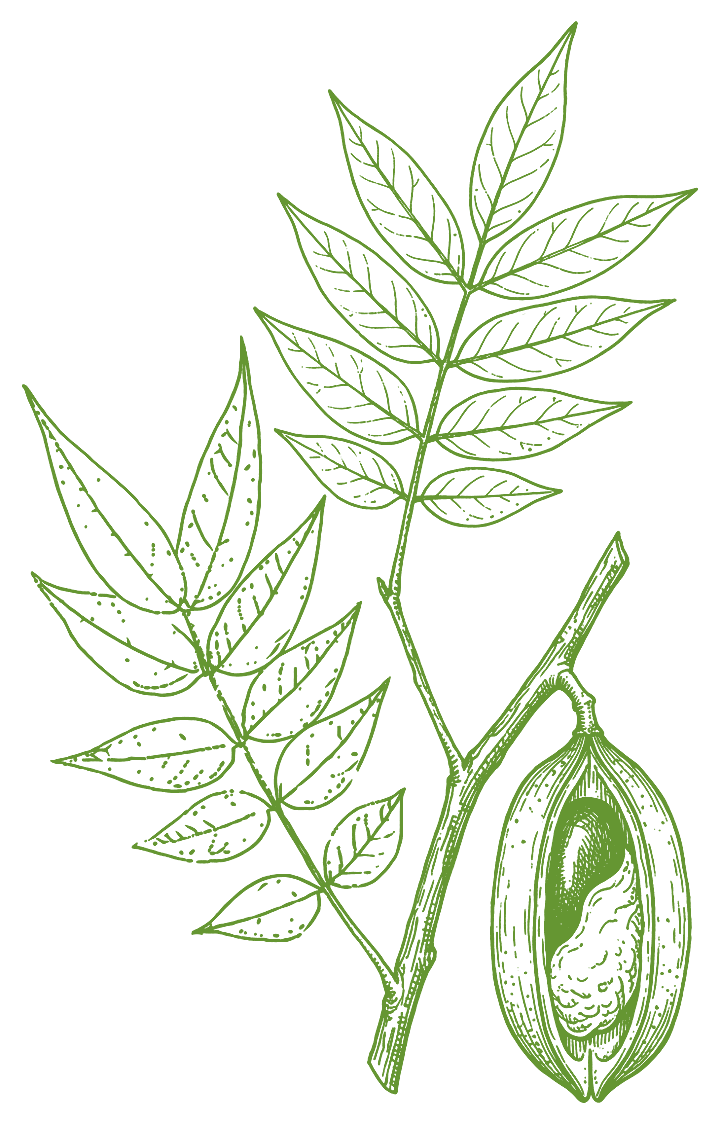
Did you know?
In French Guiana cumaseba is bois pagaie, and it is also recorded there as pau-de-remo: French and Portuguese for "paddle wood"[3].
It is a floodplain specialist. Its pods split open on the tree to release a single large seed, and many seeds hold pockets of air, so they float away on the flood[4, 5]. Some stay afloat for up to two months[4].
It can grow 40 m (130 ft) tall, on a trunk up to 4 m (13 ft) across that flares at the base into tall, wavy buttresses[4, 10].
Cut into its inner bark and it gives an abundant red sap[4].
Chemists have found plant compounds in cumaseba that were new to science, including dihydrocajanin, described from the heartwood in 1992, and dihydrolicoisoflavone, described in 1995[6, 7].
Origins and history
Cumaseba is a large tree of the lowland rain forest. Its range runs from the western Amazon of Peru, Ecuador and Colombia east through Venezuela and Brazil to Guyana, Suriname and French Guiana[1, 4]. It grows above all in forests that flood each year, the river forests Brazilians call várzea and igapó[4, 5], and it can reach 40 m (130 ft)[4, 10]. The tree has adapted its seeds to the water. Its pods open while still on the branch, each releasing one big seed. Seeds with enough trapped air float on the floodwater and can be carried far downstream, while heavier ones sink and stay near the parent tree[4, 5].
Augustin Pyramus de Candolle described the species in 1826 in his Mémoires sur la famille des Légumineuses, a study of the legume family[1, 2]. The people who live beside it gave it names of their own: pitaica and paracutaca in Brazil[3, 4]; bois pagaie and pau-de-remo, "paddle wood", in French Guiana[3]; and cumaseba or cumaceba in Peru[9, 10]. Brazilian researchers also count it as a tree of great timber potential[4].
In Peru the tree is known for its bark. In Loreto, in the Peruvian Amazon, the bark is traditionally steeped in aguardiente, a local cane spirit[10]. Researchers have studied bark from Peruvian trees, and today cumaceba is also prepared in Peru as a powdered extract[8, 9].
Traditional uses
Cumaseba's traditions come from the Peruvian Amazon, where the bark is steeped in cane spirit and sipped as an aperitif[10].
Bark in cane spirit
In Loreto the bark is traditionally macerated in aguardiente, a local cane spirit, and a small glass is taken before meals.[10]
Joint comfort
This bark aperitif is a traditional Amazonian preparation for the joints. Cumaseba supports joint function and comfort.*[10]
A tonic for men
A stronger preparation, left to steep for about a month, is a traditional men's tonic in the Peruvian Amazon. Cumaseba supports energy and vitality* and healthy libido.*[10]
A modern extract
Today cumaceba bark is also made into a powdered, spray-dried extract in Peru.[9]
Plant compounds
Cumaseba's best-studied plant compounds are isoflavonoids, especially the isoflavanones. Chemists who examined the heartwood isolated seven flavonoids, among them the isoflavanones dihydrobiochanin A, ferreirin and dalbergioidin and a new one they named dihydrocajanin[6]. Another isoflavanone new to science, dihydrolicoisoflavone, was later described from the same species[7]. The bark contains the isoflavonoids biochanin A and dihydrobiochanin A, together with T-cadinol, a sesquiterpene[8].
Precautions
- Not for use during pregnancy or breastfeeding.
- If you take medication, talk to your healthcare practitioner before use.
- If you have a health condition, talk to your healthcare practitioner before use.
Where our cumaseba comes from
Our cumaseba bark is wild-harvested. Every batch is tested for heavy metals, mold, yeast and pathogens.
- Wild-harvested
- South America
- Tested every batch
Raintree products with cumaseba

Cumaseba is also an ingredient in these Raintree products
Frequently asked questions
What is cumaseba?
Cumaseba is Swartzia polyphylla, a tall tree of the pea family that grows in the rain forests of the Amazon and the Guianas, especially in forests that flood each year. In Peru it is known for its bark.
Is cumaseba the same as cumaceba and pitaica?
Yes, they are the same tree. Cumaseba and cumaceba are two spellings of its Peruvian name, and pitaica is its name in Brazil.
How is cumaseba bark traditionally prepared?
In the Peruvian Amazon the bark is steeped in aguardiente, a local cane spirit, and a small glass is sipped before meals. A stronger preparation is left to steep for about a month.
What does a cumaseba tree look like?
It is a tall tree, reaching 40 m, with a trunk that flares at the base into tall, wavy buttresses and an inner bark that gives a red sap. Its pods split open on the branch, and each drops a single large seed that can float on floodwater.
Where does cumaseba grow?
Cumaseba grows in the lowland rain forests of Peru, Ecuador, Colombia, Venezuela, Brazil and the Guianas, especially in river forests that flood each year.
Which part of cumaseba does Raintree use?
We use the bark, wild-harvested.
References
- Royal Botanic Gardens, Kew. Plants of the World Online: Swartzia polyphylla DC. powo.science.kew.org
- International Plant Names Index (IPNI). Swartzia polyphylla DC., Mémoires sur la famille des Légumineuses (1826). ipni.org
- GBIF Secretariat. Swartzia polyphylla DC.: vernacular names (TAXREF, French Guiana; Flora e Funga do Brasil – Lista Oficial). gbif.org
- Batista AWS, Campos MM, Ribeiro RC. Variação intraespecífica de pitaica (Swartzia polyphylla DC.) (Fabaceae) em florestas inundáveis, Caxiuanã, Pará. Terceira Margem Amazônia. 2021;6(16):191–207. doi:10.36882/2525-4812.2021v6i16.ed.esp.p191-207
- Williamson GB, Costa F, Minte Vera CV. Dispersal of Amazonian trees: hydrochory in Swartzia polyphylla. Biotropica. 1999;31(3):460–465. doi:10.1111/j.1744-7429.1999.tb00388.x
- Osawa K, Yasuda H, Maruyama T, Morita H, Takeya K, Itokawa H. Isoflavanones from the heartwood of Swartzia polyphylla and their antibacterial activity against cariogenic bacteria. Chemical and Pharmaceutical Bulletin. 1992;40(11):2970–2974. doi:10.1248/cpb.40.2970
- DuBois JL, Sneden AT. Dihydrolicoisoflavone, a new isoflavanone from Swartzia polyphylla. Journal of Natural Products. 1995;58(4):629–632. doi:10.1021/np50118a028
- Rojas R, Bustamante B, Ventosilla P, Fernández I, Caviedes L, Gilman RH, Lock O, Hammond GB. Larvicidal, antimycobacterial and antifungal compounds from the bark of the Peruvian plant Swartzia polyphylla DC. Chemical and Pharmaceutical Bulletin. 2006;54(2):278–279. doi:10.1248/cpb.54.278
- Pariona-Huapaya D, Zavaleta AI, Acuña GF, Zamudio-Malpartida K. Potencial prebiótico in vitro del extracto atomizado de Swartzia polyphylla, Maytenus macrocarpa y Jatropha macrantha sobre Lactobacillus plantarum y Lactobacillus acidophilus. Manglar. 2022;19(4):317–322. doi:10.57188/manglar.2022.040
- Mejía K, Rengifo E. Cumaceba, Swartzia polyphylla. In: Plantas medicinales de uso popular en la Amazonía peruana. 2nd ed. Lima: Agencia Española de Cooperación Internacional; Instituto de Investigaciones de la Amazonía Peruana (IIAP); 2000:89. repositorio.iiap.gob.pe (hdl:20.500.12921/74)