

 USD
USD


Did you know?
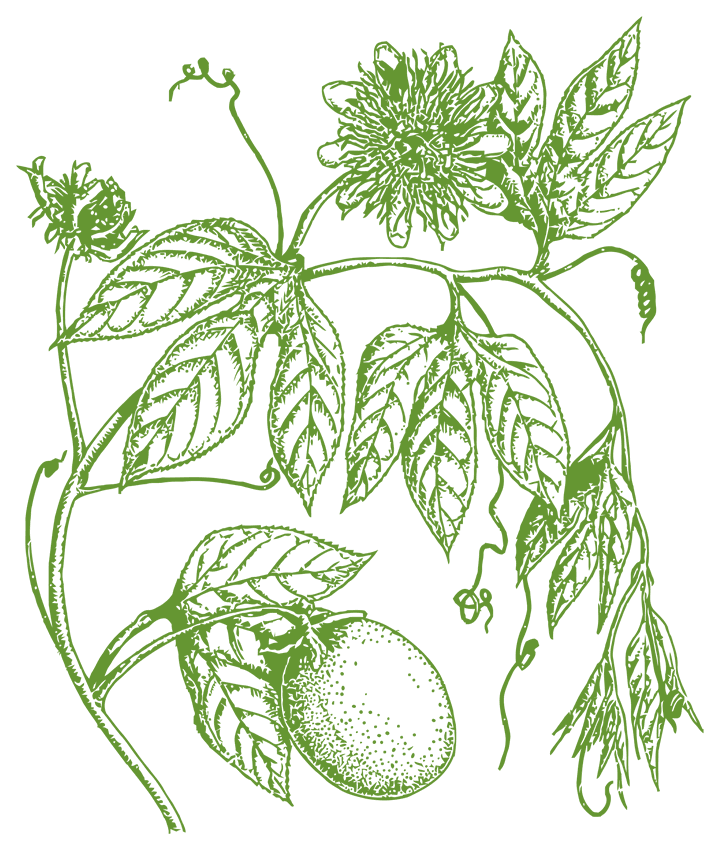
The name passionflower refers to the Passion of Christ. Christian missionaries in 1500s Latin America saw its symbols in the flower: the fringed corona as the crown of thorns, and the ten petals and sepals as the apostles[2, 3, 12].
The name maypop comes from the hollow, egg-shaped fruits, which pop loudly when crushed[2, 3].
The passionflower genus is large, with more than 500 species[4].
Maypop is Tennessee's state wildflower. The state's schoolchildren chose it in a 1919 vote, and it was named the state wildflower in 1973. Its Native American name, ocoee, was also given to the Ocoee River[12].
Maypop is a caterpillar food plant for three butterflies: the Gulf fritillary, the variegated fritillary and the zebra longwing[2, 3, 6].
The fruit known as passion fruit comes from a South American relative, Passiflora edulis, native from Brazil to northeastern Argentina[7].
Origins and history
Maypop is a fast-growing perennial vine that climbs with tendrils and can reach 25 feet; where winters are cold it dies back to the ground and grows again in spring[2, 3, 4]. Its leaves have three lobes, and its intricate flowers, up to 3 inches across, have white or pale lavender petals and sepals and a crown of wavy, pink-to-purple filaments[2, 3]. After flowering come the maypops themselves: egg-shaped fruits with an edible pulp[2, 3, 6]. The vine grows wild across the southeastern and south-central United States and in Bermuda[1, 2, 3], on roadsides, prairies, pastures and woodland edges[2]. Its other English names include apricot vine, wild apricot and purple passionflower[3, 5, 11, 12]. Gardeners grow it for its flowers, its fruit and the butterflies it feeds[2, 3, 6].
Europeans first met passionflowers in Latin America in the 1500s[3, 5], and the missionaries' reading of the flower gave the whole genus its name, Passiflora[3]. Carl Linnaeus named the North American maypop Passiflora incarnata in 1753[1].
Native Americans had their own use for the plant, brewing its leaves into a calming tea[2, 3]. Passionflower also became part of European folk tradition, and its dried aerial parts are still taken there as a calming tea[5, 8, 9]. European herbal handbooks have recorded this use continuously since at least 1938, and European herbal regulators today list passionflower among traditional herbal preparations for relaxation[8, 9].
Traditional uses
Passionflower has been tested in a number of small clinical studies in people[5, 10], and European herbal regulators recognize its long tradition as a calming tea[8, 9].
A calming tea
Native Americans brewed the leaves into a calming tea, and European tradition uses the dried aerial parts in the same way. Passionflower helps you relax.*[2, 3, 5, 9]
A calm, balanced mood
A wild fruit
Across its native range, ripe maypops are eaten fresh from the vine or cooked into jelly.[2, 3]
Plant compounds
The aerial parts of passionflower contain flavonoids, mainly C-glycosides of apigenin and luteolin, such as vitexin, isovitexin and isoorientin[8, 10]. They also contain traces of beta-carboline alkaloids, such as harman, and a cyanogenic glycoside, gynocardin[3, 8, 10].
Precautions
Where our passionflower comes from
Our passionflower is wild-harvested. Every batch is tested for heavy metals, mold, yeast and pathogens.
- Wild-harvested
- South America
- Tested every batch
Raintree products with passionflower
Passionflower is also an ingredient in these Raintree products
Frequently asked questions
What is passionflower?
Passionflower is Passiflora incarnata, a climbing vine of the passionflower family, native to the central and eastern United States and Bermuda. Its dried leaves, stems and flowers have a long tradition as a calming tea.
Why is it called passionflower?
Christian missionaries in 1500s Latin America saw symbols of the Passion of Christ in passionflowers, such as a crown of thorns in the fringed corona. The genus name, Passiflora, comes from the same story.
What is a maypop?
Maypop is the common name for Passiflora incarnata in the American South, and for its egg-shaped fruit, which pops when crushed. The ripe fruit is edible.
Is passionflower the same as passion fruit?
They are relatives in the same genus. The fruit known as passion fruit comes from Passiflora edulis, a South American species. The maypop has an edible fruit of its own.
Which part of passionflower is used?
The aerial parts of the plant: the leaves, stems and flowers.
Where does passionflower grow?
Maypop grows wild across the southeastern and south-central United States and in Bermuda. It is also grown in gardens for its flowers and fruit.
References
- Royal Botanic Gardens, Kew. Plants of the World Online: Passiflora incarnata L. powo.science.kew.org
- Lady Bird Johnson Wildflower Center, University of Texas at Austin. Passiflora incarnata (maypop). Native Plant Database. wildflower.org
- North Carolina State University Extension. Passiflora incarnata (passionflower, maypop). North Carolina Extension Gardener Plant Toolbox. plants.ces.ncsu.edu
- Encyclopaedia Britannica. Passion flower. britannica.com
- National Center for Complementary and Integrative Health (NCCIH). Passionflower. nccih.nih.gov. Updated April 2025.
- University of Florida, IFAS Extension. Passion flower. Gardening Solutions. gardeningsolutions.ifas.ufl.edu
- Royal Botanic Gardens, Kew. Plants of the World Online: Passiflora edulis Sims. powo.science.kew.org
- European Medicines Agency, Committee on Herbal Medicinal Products. Assessment report on Passiflora incarnata L., herba. EMA/HMPC/669738/2013. 2014. ema.europa.eu
- European Medicines Agency, Committee on Herbal Medicinal Products. Community herbal monograph on Passiflora incarnata L., herba. EMA/HMPC/669740/2013. 2014. ema.europa.eu
- Janda K, Wojtkowska K, Jakubczyk K, Antoniewicz J, Skonieczna-Żydecka K. Passiflora incarnata in neuropsychiatric disorders: a systematic review. Nutrients. 2020;12(12):3894. doi:10.3390/nu12123894
- GBIF Secretariat. Passiflora incarnata L.: vernacular names (GRIN Taxonomy, Catalogue of Life, ITIS, TAXREF). gbif.org
- Tennessee Secretary of State. Tennessee state symbols: state wildflower, passion flower. sos.tn.gov. Accessed 29 Sep 2026.